How to Immigrate to Canada Through the Healthcare Category-Based Draws In 2025

With Canada facing significant shortages in its healthcare system, the federal government has created a fast-track immigration pathway specifically for medical professionals. The Express Entry Healthcare Category-Based Draws are your direct route to Canadian Permanent Residence if you work in this high-demand field.

This complete guide will walk you through everything you need to know—from determining your eligibility and gathering the correct documents to strategic tips for maximizing your Comprehensive Ranking System (CRS) score.

Why Canada is Holding Healthcare-Specific Draws

Canada’s immigration system is designed to meet the country’s economic needs. With an aging population and growing healthcare demands, Immigration, Refugees and Citizenship Canada (IRCC) now regularly holds category-based selection draws to invite more health professionals.

The advantage for you? These targeted draws have significantly lower CRS score requirements compared to general draws. While general draws might require scores above 540, healthcare draws have invited candidates with scores as low as 410-450. This is a game-changer for qualified nurses, doctors, and allied health workers worldwide.

Part 1: Eligibility – Do You Qualify for the Healthcare Category?

To be considered in a healthcare-specific draw, you must meet two key criteria.

1. Be Eligible for the Express Entry Pool

First, you must qualify for one of these three core programs and have an active profile in the Express Entry pool:

  • Federal Skilled Worker Program (FSWP): For skilled professionals with foreign work experience.
  • Canadian Experience Class (CEC): For those with at least one year of skilled work experience in Canada.
  • Federal Skilled Trades Program (FSTP): Less common for healthcare, but possible for some technical roles.

2. Meet the Healthcare Work Experience Requirement

This is the most important requirement for the category-based draw. You must have at least 6 months of continuous full-time work experience (or an equal amount in part-time hours) in a single eligible healthcare occupation within the last 3 years.

Key Eligible Healthcare Occupations (NOC 2021):

  • Nursing & Assistants:
    • NOC 31300 – Registered Nurses and Registered Psychiatric Nurses
    • NOC 32101 – Licensed Practical Nurses
    • NOC 33102 – Nurse Aides, Orderlies, and Patient Service Associates
  • Physicians & Specialists:
    • NOC 31100 – Specialists in Clinical and Laboratory Medicine
    • NOC 31101 – Specialists in Surgery
    • NOC 31102 – General Practitioners and Family Physicians
  • Allied Health Professionals:
    • NOC 32100 – Optometrists
    • NOC 32110 – Dentists
    • NOC 32120 – Pharmacists
    • NOC 32121 – Medical Sonographers
    • NOC 32122 – Medical Laboratory Technologists
    • NOC 32200 – Audiologists and Speech-Language Pathologists
    • NOC 32201 – Physiotherapists

Pro Tip: Always check the official IRCC website for the most current list of eligible occupations, as it can be updated.

Part 2: The Document Checklist – Get Your Papers Ready

Preparation is key to a successful Express Entry application. Having these documents ready before you receive an Invitation to Apply (ITA) will save you from a last-minute scramble.

Core Documents for Every Applicant:

  1. Passport: For you and all accompanying family members. Ensure it’s valid.
  2. Language Test Results: IELTS/CELPIP for English or TEF/TCF for French. Must be less than 2 years old.
  3. Educational Credential Assessment (ECA): If you studied outside Canada, you need an ECA from a designated organization (like World Education Services) to verify your foreign degree/diploma is valid and equal to a Canadian one.
  4. Proof of Work Experience: This is critical. Gather:
    • Reference letters from your employers on official company letterhead.
    • Letters must include your job title, dates of employment, number of hours worked per week, a detailed list of your duties and responsibilities, and your annual salary.
    • The duties in your letter must closely match the lead statement and main duties of your NOC code.
  5. Proof of Funds: Unless you are currently authorized to work in Canada and have a valid job offer, you must show you have enough money to support your family. Check IRCC’s latest fund requirements.

Additional Documents Often Required:

  • Provincial nomination certificate (if applicable)
  • Written job offer from a Canadian employer (if applicable)
  • Police clearance certificates from every country you’ve lived in for 6+ months since the age of 18
  • Medical examination results from an IRCC-approved panel physician
  • Birth certificates for children
  • Marriage certificate or proof of common-law status

Click Here To Learn More: Complete 2025 Guide to Canada’s Express Entry Healthcare Category for Medical and Allied Professionals

Part 3: CRS Tips – How to Maximize Your Score for a Healthcare Draw

Even though the cut-off scores for healthcare draws are lower, a higher score always increases your chances of receiving an ITA. Here’s how to boost your points.

1. Maximize Your Language Score (The Single Biggest Factor)

Your language ability is worth up to 260 points (for a single applicant). Don’t just settle for the minimum.

  • Aim for “Superior” (CLB 10+): Moving from CLB 9 to CLB 10 in all four abilities can add 32 points! Consider taking a test preparation course to hit these higher benchmarks.
  • Consider French: Strong French skills can earn you up to 50 additional points. Even basic French (CLB 7) with strong English can earn you 25 points.

2. Secure a Valid Job Offer (Up to 200 Points)

While not required for the healthcare category, a job offer is a massive point booster.

  • A senior management (TEER 0) job offer = 200 points
  • A skilled (TEER 1, 2, or 3) job offer = 50 points
  • How to get one: Use job boards like Indeed.ca, Workopolis, and contact healthcare recruitment agencies that specialize in placing international professionals.

3. Leverage Your Spouse or Common-Law Partner

If your partner is accompanying you, their profile can add valuable points.

  • Their Language Skills: Your partner can take a language test. Their scores can add up to 20 points to your total.
  • Their Canadian Work Experience/Education: If they have either, it can add 10 points.

4. Pursue a Provincial Nomination (An Automatic 600 Points)

This is the ultimate CRS booster. A nomination from a Provincial Nominee Program (PNP) under an enhanced stream adds 600 points to your score, guaranteeing you an ITA in the next round.

  • Target Healthcare PNPs: Many provinces, like Ontario, British Columbia, and Nova Scotia, have PNP streams that specifically target healthcare workers. You can be nominated by a province and be eligible for the federal healthcare draw.

5. Other Strategic Point Boosters

  • An Additional Degree/Diploma: Another post-secondary credential of at least one year can add up to 8 points.
  • Study in Canada: Having a Canadian credential (e.g., a 1-year post-graduate certificate) can earn you extra points and may make you eligible for a Post-Graduation Work Permit (PGWP).

Your 5-Step Action Plan to Success

  1. Assess & Prepare: Confirm your NOC code is eligible. Begin the lengthy process of getting your professional credentials assessed by the provincial licensing body (e.g., the College of Nurses of Ontario). This is separate from the ECA and is required to work in your field in Canada.
  2. Take Tests & Get an ECA: Book your language test and apply for your Educational Credential Assessment.
  3. Create Your Express Entry Profile: Fill out your profile accurately, ensuring your work experience is correctly linked to an eligible NOC code.
  4. Enter the Pool & Improve Your Score: Once in the pool, use the strategies above to improve your CRS score while you wait for a category-based draw.
  5. Receive an ITA & Apply: If you receive an Invitation to Apply, you have 60 days to submit your complete application for permanent residence.

The Healthcare Category-Based Draws represent one of the most straightforward pathways to Canadian immigration for doctors, nurses, and health workers. By understanding the eligibility requirements, preparing your documents meticulously, and strategically maximizing your CRS score, you can confidently navigate the process and soon be on your way to starting your new life in Canada.

Ready to begin your journey? Start by checking your eligibility and gathering your documents today!

Complete 2025 Guide to Canada’s Express Entry Healthcare Category for Medical and Allied Professionals

Canada is rolling out the red carpet for healthcare professionals. With a growing demand for medical services and an aging population, the Canadian government has made healthcare workers a top immigration priority. Suppose you are a nurse, doctor, or allied health worker dreaming of building your life and career in Canada. In that case, the Express Entry Healthcare Category is your fastest track to permanent residence.

This definitive 2025 guide breaks down everything you need to know—from eligibility and in-demand occupations to a step-by-step application process. Let’s explore how you can turn your medical expertise into a Canadian future.

Why Canada is Actively Recruiting Healthcare Professionals in 2025

Canada faces a significant shortage of healthcare workers. Provinces and territories are actively seeking skilled professionals to fill critical gaps in hospitals, clinics, and long-term care facilities. The Express Entry system, Canada’s main application management system for skilled workers, now holds regular category-based selection draws specifically targeting healthcare occupations.

This means that if you qualify, you could receive an Invitation to Apply (ITA) for permanent residence with a significantly lower Comprehensive Ranking System (CRS) score than general draws. It’s a direct pathway designed for you.

Are You Eligible? Understanding the Core Requirements

To be eligible for a healthcare category draw, you must meet two sets of criteria.

1. General Express Entry Eligibility

First, you must qualify for one of the three programs under the Express Entry system:

  • Federal Skilled Worker Program (FSWP): For skilled professionals with foreign work experience.
  • Canadian Experience Class (CEC): For skilled professionals with at least one year of work experience in Canada.
  • Federal Skilled Trades Program (FSTP): Less common for healthcare, but relevant for some technical roles.

The primary requirements include:

  • At least 1 year of continuous, full-time (or equivalent part-time) skilled work experience.
  • A valid language test (English or French) meeting the program’s benchmark.
  • An Educational Credential Assessment (ECA) if you studied outside Canada (for FSWP).

2. Healthcare Category-Specific Eligibility

This is the crucial part for 2025. To be considered for a healthcare-specific draw, you must have at least 6 months of continuous work experience (within the past 3 years) in one of the targeted healthcare occupations. This experience can be gained in Canada or abroad.

In-Demand Healthcare Occupations for 2025 Express Entry Draws

The following is a list of key occupations (with their NOC codes) that are consistently targeted. This is not an exhaustive list, but it covers the most sought-after professions:

For Nurses & Assistants:

  • NOC 31300 – Registered Nurses and Registered Psychiatric Nurses
  • NOC 32101 – Licensed Practical Nurses
  • NOC 33102 – Nurse Aides, Orderlies, and Patient Service Associates

For Physicians & Specialists:

  • NOC 31100 – Specialists in Clinical and Laboratory Medicine
  • NOC 31101 – Specialists in Surgery
  • NOC 31102 – General Practitioners and Family Physicians

For Allied Health Professionals:

  • NOC 32100 – Optometrists
  • NOC 32110 – Dentists
  • NOC 32120 – Pharmacists
  • NOC 32121 – Medical Sonographers
  • NOC 32122 – Medical Laboratory Technologists
  • NOC 32129 – Other Medical Technologists and Therapists
  • NOC 32190 – Dentistry Other Technical Occupations
  • NOC 32200 – Audiologists and Speech-Language Pathologists
  • NOC 32201 – Physiotherapists
  • NOC 32209 – Other Professional Occupations in Therapy and Assessment
  • NOC 33101 – Medical Laboratory Technicians

Always check the official IRCC website for the most current list of eligible occupations.

Your 5-Step Roadmap to Canadian PR via the Healthcare Category

Navigating the process correctly is key to a successful application. Here is your step-by-step guide for 2025.

Step 1: Get Your Credentials Assessed & Licensed

This is the most critical preparatory step for healthcare workers. Canada has high standards for medical practice.

  • Educational Credential Assessment (ECA): For Express Entry, you need an ECA from a designated organization (like World Education Services) to verify that your foreign degree is valid and equivalent to a Canadian one.
  • Professional Licensing: This is separate from the ECA. To work in your regulated profession in Canada, you must be licensed by the provincial regulatory body (e.g., the College of Nurses of Ontario, the College of Physicians and Surgeons of British Columbia). Start this process early, as it can be lengthy and may require exams or additional training.

Step 2: Take a Language Proficiency Test

You must prove your proficiency in English or French. Take a designated test like IELTS or CELPIP for English, or TEF or TCF for French. Aim for the highest score possible to maximize your CRS points.

Step 3: Create Your Express Entry Profile

Create a profile on the IRCC website. This is where you input your details, work experience, education, and language test results. You will automatically be assigned a CRS score out of 1,200 points. If you meet the healthcare category criteria, your profile will be in the pool for targeted draws.

Step 4: Receive an Invitation to Apply (ITA)

If you are selected in a Healthcare category-based draw, you will receive an ITA. The CRS cut-off score for these draws is typically much lower than in general draws—sometimes by 50-100 points or more.

Step 5: Submit Your Permanent Residence Application

Once you receive an ITA, you have 60 days to submit a complete application for permanent residence. This includes medical exams, police certificates, and all supporting documents. Processing times are typically around 6 months.

Click Here To Learn More: Canada Targets 66% Growth in Provincial Immigration by 2026

Maximizing Your CRS Score: Tips for Healthcare Workers

While the category-based draw gives you an advantage, a higher score is always better. Boost your points by:

  • Improving Your Language Score: Moving from CLB 9 to CLB 10 can add significant points.
  • Securing a Valid Job Offer: A job offer from a Canadian employer can give you 50 or 200 extra points, though it is not mandatory for the healthcare category.
  • Getting a Provincial Nomination: A nomination from a Provincial Nominee Program (PNP) adds 600 points and guarantees an ITA. Many provinces have healthcare-specific PNP streams.
  • Including Your Spouse/Partner: Your partner’s language skills, education, and Canadian work experience can add valuable points to your profile.

Beyond Express Entry: Alternative Pathways for Healthcare Workers

While Express Entry is the fastest federal route, don’t overlook these excellent alternatives:

  • Provincial Nominee Program (PNP) Healthcare Streams: Almost every province has a stream dedicated to healthcare workers, such as Ontario’s Human Capital Priorities Stream (which holds targeted tech draws) or British Columbia’s Healthcare Professional stream.
  • Rural and Northern Immigration Pilot (RNIP): This program helps smaller communities attract healthcare talent.
  • Atlantic Immigration Program (AIP): Designed for the four Atlantic provinces (New Brunswick, Newfoundland and Labrador, Nova Scotia, and Prince Edward Island).

Common Pitfalls to Avoid in Your 2025 Application

  • Neglecting Licensing: Assuming your foreign license is automatically valid in Canada. Start the licensing process with the provincial college before you move.
  • Inaccurate Work Experience: Ensure your job duties listed in your profile accurately match the lead statement and main duties of your NOC code.
  • Letting Documents Expire: Your language test results and ECA are only valid for two years. Ensure they remain valid throughout the application process.

Frequently Asked Questions (FAQ)

Q: Do I need a job offer to be eligible for the Healthcare Category?
A: No, a job offer is not mandatory. The category is designed to select candidates based on their work experience, not a pre-arranged job.

Q: I am a doctor. Is the process different for me?
A: The Express Entry process is the same. However, the licensing process for physicians is particularly complex and requires passing certification exams and completing a residency. Contact the Medical Council of Canada (MCC) and the provincial college where you wish to practice for detailed guidance.

Q: How long does the entire process take?
A: From creating your profile to receiving PR, it can take approximately 9-12 months, depending on licensing, document preparation, and IRCC processing times.

Q: Can my family come with me?
A: Yes! When you apply for permanent residence through Express Entry, you can include your spouse or common-law partner and dependent children in your application. They will receive PR status alongside you.

Your Action Plan for 2025:

  • Research your specific provincial licensing body and begin the application process.
  • Gather all educational and professional documents.
  • Book your language proficiency test and aim for a high score.
  • Get your Educational Credential Assessment (ECA).
  • Create/Update your Express Entry profile and ensure it accurately reflects your healthcare experience.

The door is open for healthcare professionals in Canada. By taking strategic, informed steps, you can navigate the Express Entry system for healthcare workers successfully and embark on a rewarding new chapter in your career and life.

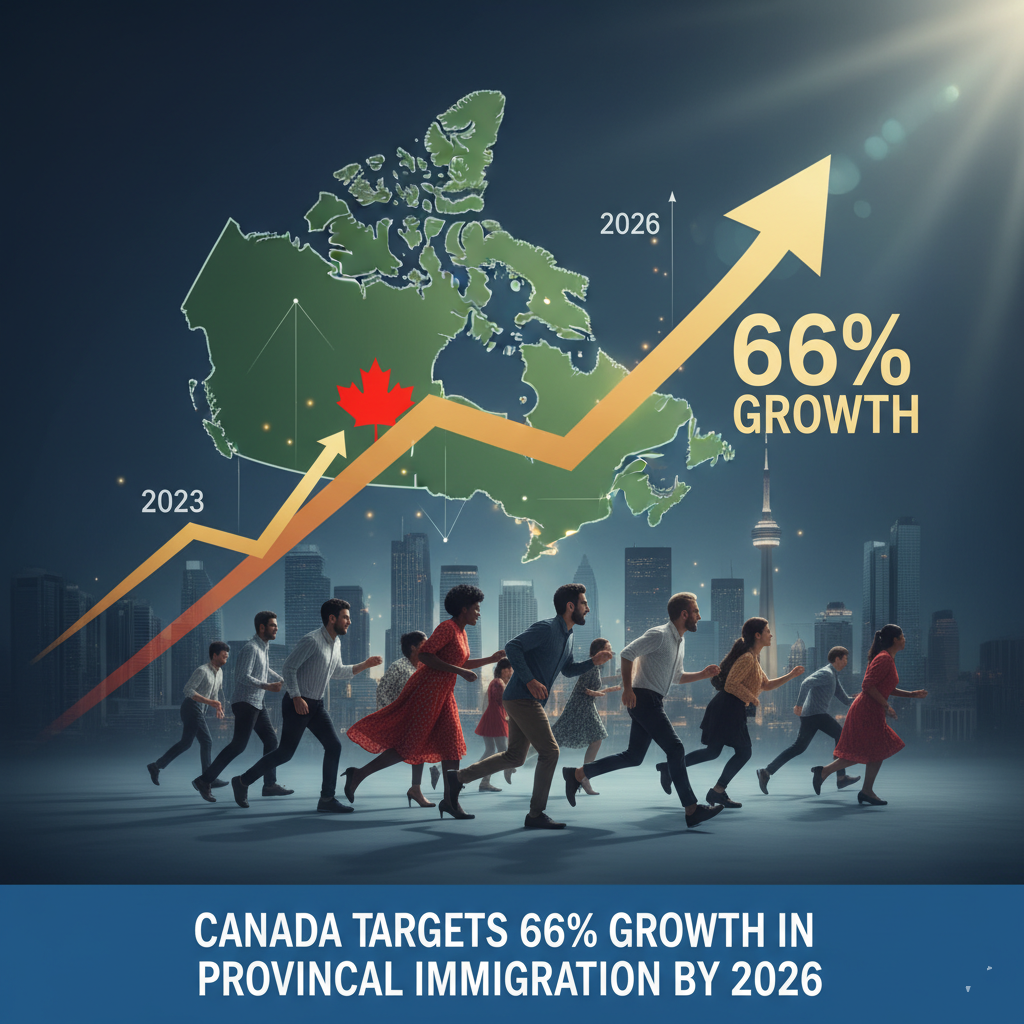
Canada Targets 66% Growth in Provincial Immigration by 2026

In a major policy shift, the Canadian government has announced a massive increase to its Provincial Nominee Program (PNP) targets, signaling a new era of opportunity for skilled workers, international graduates, and employers across the country. The federal government has set a target for 91,500 permanent resident admissions through the PNP in 2026—a dramatic 66% increase from the 2025 target of 55,000.

This move reverses a previous decision to halve PNP targets and underscores Canada’s renewed commitment to leveraging provincial expertise to address local labour shortages. This guide will break down exactly what this PNP increase means for immigration candidates and how you can position yourself to benefit.

A Sharp Reversal: Understanding the PNP Target Surge

Canada’s Immigration Levels Plan is a multi-year blueprint that sets admission targets for permanent residents. The latest plan reveals a strategic pivot back towards empowering provinces to select the immigrants they need most.

  • 2025 Target: 55,000 admissions
  • 2026 Target: 91,500 admissions (a 66% increase)
  • 2027 Target: Projected for further growth

This is a stark contrast to the targets set just one year prior, which had slashed PNP admissions by over 50%. This rapid recalibration underscores the vital role the PNP plays in Canada’s economic immigration strategy, especially as provinces grapple with acute workforce gaps.

What This 66% Increase Means for Immigration Candidates

This surge in PNP targets is overwhelmingly positive news, particularly for those already in Canada on temporary status. Here’s who stands to benefit the most:

1. Temporary Residents in Canada (Work & Study Permit Holders)

Most PNP streams are designed to nominate individuals who have already integrated into a province’s community and economy. This increase means:

  • Easier Transition to PR: More nomination spots directly translate to a higher chance for temporary workers and international graduates to secure permanent status.
  • Post-Graduation Work Permit (PGWP) Holders: International student graduates are often ideal PNP candidates. With more provincial nominations available, their pathway to Canadian Permanent Residence becomes significantly more accessible.
  • Bridging Open Work Permit (BOWP) Access: PGWP holders who receive a provincial nomination can apply for a BOWP, allowing them to maintain legal work status while their PR application is processed.

2. Candidates Who Struggle with Express Entry

The PNP is a powerful alternative for those who may not be competitive in the federal Express Entry system due to:

  • Low CRS Scores: If your Comprehensive Ranking System score falls below the cut-off for Express Entry draws, a provincial nomination adds 600 points, guaranteeing an Invitation to Apply (ITA).
  • Lower-Skilled Occupations: Many PNP streams target specific in-demand jobs in NOC TEER 4 or 5 categories, which are not typically eligible for Express Entry programs like the Canadian Experience Class (CEC).
  • Lack of French Proficiency: With Express Entry category-based draws favoring French speakers, the PNP remains a key pathway for those who do not speak French.

3. Employers Seeking to Retain Foreign Talent

The federal government is removing additional CRS points for arranged employment from Express Entry in 2025. This makes the PNP more critical than ever for employers who rely on foreign workers. A larger PNP allows businesses to more easily sponsor and retain valuable employees for the long term by supporting their journey to permanent residency.

Click To Learn More: New Amendments Propose Tougher Rules for Citizenship by Descent

The Mechanics: How Targets Turn into Nominations

It’s important to understand the process:

  1. IRCC Sets Admissions Targets: The 91,500 figure for 2026 represents the number of people Canada plans to welcome as permanent residents through the PNP.
  2. Provinces Receive Nomination Allocations: IRCC assigns each province and territory an annual quota—the number of candidates they are allowed to nominate.
  3. Provinces Hold Draws: With a higher allocation, provinces can issue more Invitations to Apply (ITAs) in their provincial draws.
  4. Candidates Apply for PR: Nominated candidates then apply to the federal government for permanent residence.

This increased allocation for 2026 gives provinces the green light to plan for more aggressive recruitment and nomination cycles throughout the year.

A Look Back: The Context of Recent PNP Trends

The recent increase comes after a period of significant constraint. The previous 2024-2027 Levels Plan had drastically reduced PNP targets, leading provinces to make difficult choices:

  • British Columbia: Suspended new graduate streams and wait-listed International Post-Graduate applications.
  • Nova Scotia & New Brunswick: Prioritized applicants in healthcare, trades, and construction.
  • Saskatchewan: Limited overseas recruitment and placed caps on nominations for certain sectors like retail and hospitality.

These restrictive measures highlight why the new, expanded targets are such a significant and positive development. Since January, most provinces have successfully negotiated higher allocations with the federal government, demonstrating strong demand to address local labour needs.

What is the Provincial Nominee Program (PNP)?

Launched in 1998, the PNP is a cornerstone of Canadian immigration policy, designed to spread the economic benefits of immigration across the country. It is the second most popular pathway for skilled workers after Express Entry.

There are two main routes to a provincial nomination:

  1. Enhanced Nominations: Linked to the Express Entry system. Provinces scan the federal pool and nominate candidates who fit their criteria, awarding them 600 additional CRS points.
  2. Base Nominations: Operate outside of Express Entry. Candidates apply directly to a provincial stream, and if nominated, submit a separate paper-based PR application to IRCC.

Key Takeaway: Prepare Now for New Opportunities

The 66% increase in PNP admissions for 2026 is a clear signal that Canada’s provinces are back in the driver’s seat for selecting economic immigrants. For candidates, this means:

  • If you are in Canada: Focus on building a strong profile in your province—secure stable employment, build community ties, and research the specific PNP streams you may be eligible for.
  • If you are outside Canada: Research which provinces are actively recruiting your skillset from overseas and prepare your credentials for assessment.

The landscape of Canadian immigration is constantly evolving. This latest shift presents a monumental opportunity for thousands to achieve their dream of living and working in Canada. By understanding these changes and preparing accordingly, you can dramatically increase your chances of success.

New Amendments Propose Tougher Rules for Citizenship by Descent

Many children of Canadian citizens could soon lose automatic eligibility for citizenship by descent if the latest amendments to Bill C-3 are passed into law.

The proposed changes to Canada’s Citizenship Act would significantly tighten the rules for children born or adopted outside Canada. Under the amended version, citizenship by descent beyond the first generation would face new restrictions for children born or adopted after the legislation comes into force.

However, children born or adopted before the new law takes effect would still qualify for Canadian citizenship under the current rules.

Key Change: Three-Year Residency Requirement

According to the latest draft of Bill C-3, children born or adopted abroad to Canadian citizens by descent would only acquire citizenship at birth or adoption if their Canadian parent has physically lived in Canada for at least three years within the five years before the child’s birth or adoption.

This requirement replaces the earlier “substantial connection to Canada test,” which allowed parents to count three years of residence at any point in their lives, without the five-year restriction.

New Restrictions Under the Amendments

The revised Citizenship Act amendments also introduce two new conditions not present in earlier drafts:

1. Security Assessment

Applicants aged 18 or older seeking proof of Canadian citizenship by descent will need to undergo an official review to ensure they are not involved in issues related to national security, human rights violations, criminal activity, or economic sanctions.

2. Knowledge of Language and Culture

Applicants between 18 and 55 years old will be required to demonstrate sufficient knowledge of English or French, as well as an understanding of Canadian culture, values, rights, and responsibilities.

Understanding Citizenship by Descent

Citizenship by descent allows children born outside Canada to inherit citizenship from their Canadian parent — either at birth or through adoption.

However, since 2009, the first-generation limit (FGL) has restricted this right. Under the current law, children of Canadian citizens born or naturalized in Canada can gain citizenship by descent, but children of citizens by descent cannot pass citizenship to their own children born abroad.

In December 2023, the Ontario Superior Court of Justice ruled that this FGL restriction was unconstitutional, prompting the federal government to introduce Bill C-3 to modernize the Citizenship Act.

Accountability and Reporting Requirements

The updated Bill C-3 amendments also require the Minister of Immigration to submit an annual report to Parliament detailing:

  • The number of people who obtained citizenship through the new law, and
  • Cases where security assessments were waived.

The federal government has until November 20, 2025, to finalize the amendments to the Citizenship Act.

For Bill C-3 to become law, it must still pass its third reading in both the House of Commons and the Senate, followed by Royal Assent.

Interim Measures for Lost Canadians

Until the new law takes effect, individuals affected by the first-generation limit can apply for discretionary grants of citizenship.

To do so, applicants must:

  • Submit an online application for proof of citizenship, and
  • Include all required documentation.

The Immigration, Refugees and Citizenship Canada (IRCC) will review each submission to determine eligibility.

As of 2025, the average processing time for citizenship applications is approximately eight months; however, individuals facing hardship may request expedited processing.

Click Here To Learn More: Australia Skilled Migration 2025: Everything You Need to Know About Visa Pathways & Requirements

Proposed Amendment on Birthright Citizenship Rejected

During committee discussions, a proposal by Conservative MP Michelle Rempel Garner to end birthright citizenship in Canada was voted down.

Had it passed, children born in Canada would only receive citizenship if at least one parent was a Canadian citizen or permanent resident at the time of birth.

Currently, birthright citizenship remains protected under Canadian law — meaning all children born in Canada automatically become citizens, regardless of their parents’ immigration status, except in limited cases (such as children of foreign diplomats).

This policy of jus soli (citizenship by birth) is a longstanding practice across the Americas, while many other regions, such as Europe and Asia, follow stricter citizenship-by-parentage systems similar to the one proposed in Garner’s amendment.

Culture Shock: How to Adapt Quickly When You Move Abroad

The decision to move abroad is thrilling. You’ve pictured the vibrant markets, the new cuisine, the stunning landscapes. But what many don’t picture is the profound, often disorienting, wave of culture shock that can follow the initial euphoria.

Feeling overwhelmed, lonely, or even frustrated after an international move is not a sign of failure—it’s a normal part of the journey. This guide will walk you through the stages of culture shock and provide a practical, actionable roadmap to not just survive, but thrive in your new home.

What is Culture Shock? Understanding the Transition Curve

Culture shock is the feeling of disorientation and anxiety that can occur when you are suddenly subjected to an unfamiliar culture, way of life, or set of attitudes. It’s not just about missing your favorite foods from home; it’s a deep-seated psychological response to losing the familiar cues of social interaction.

Most expats and international migrants go through a predictable cycle, often visualized as a W-curve or a series of stages:

  1. The Honeymoon Phase: Everything is new, exciting, and charming. The differences are delightful.
  2. The Negotiation Phase (The Shock): The novelty wears off. Frustration, homesickness, and irritation set in. The very things you found charming can become sources of anger.
  3. The Adjustment Phase: You develop routines and start to navigate the new culture more effectively. The language becomes easier, and you start to feel more at home.
  4. The Adaptation Phase: You feel comfortable and confident in your new environment. You accept and appreciate the culture for what it is, without constantly comparing it to “back home.”
  5. Re-entry Shock (The “Reverse” Shock): The often-unexpected shock of returning to your home country and finding it, or yourself, changed.

Actionable Strategies to Overcome Culture Shock and Adapt Quickly

Navigating culture shock is an active process. You can’t wait for it to pass; you must engage with it. Here’s how to adapt to a new culture effectively.

1. Mentally Prepare Before You Go

Knowledge is your first line of defense.

  • Research, Don’t Just Sightsee: Go beyond tourist guides. Read local news, watch popular TV shows, and listen to current music. Understand the social norms, communication styles (is it direct or indirect?), and potential taboos.
  • Set Realistic Expectations: Acknowledge that there will be challenges. You will make cultural blunders. You will feel lonely. Accepting this as part of the process reduces the pressure to have a “perfect” experience.

2. Build Your “Anchor” Routines

In a sea of change, routines are your life raft. They create a sense of stability and control.

  • Create a “Home” Base: Unpack and personalize your living space. Find a local café to become a regular at or a park for morning walks.
  • Maintain Healthy Habits: Stick to a sleep schedule, exercise, and eat well. Physical well-being is intrinsically linked to mental resilience.

3. Learn the Language (Even Just a Little)

Language is the key to unlocking a culture. You don’t need to be fluent, but making an effort is a powerful sign of respect and a major expat adaptation tool.

  • Master the Basics: Focus on essential phrases: “Hello,” “Thank you,” “Please,” “How much?” “I’m sorry.”
  • Practice Daily: Use a language app like Duolingo or Babbel for 10-15 minutes a day. Don’t be afraid to sound silly—locals almost always appreciate the effort.

4. Make a Conscious Effort to Build a Social Network

Loneliness is a major driver of culture shock. Proactively building connections is crucial.

  • Find Your Tribe: Use platforms like Meetup.comInterNations, or local Facebook groups for expats and hobbyists. Connecting with other expats provides immediate empathy and support.
  • Connect with Locals: While expat friends are vital, forming relationships with locals is the ultimate cultural adjustment hack. Take a class (cooking, dance, art), join a sports club, or volunteer for a local cause.
  • Say “Yes” to Everything (Safely): In the beginning, accept every reasonable invitation. A casual coffee, a weekend hike, or a housewarming party can lead to meaningful friendships.

5. Become a Cultural Observer

Shift from judgment to curiosity.

  • Ask “Why?” Instead of “That’s Weird”: When you encounter a confusing custom, ask a trusted local or fellow long-term expat to explain the context and history behind it.
  • Keep a Journal: Document your experiences, frustrations, and small victories. Writing helps process emotions and allows you to see your progress over time.

6. Embrace the Discomfort and Stay Patient

Adapting to life abroad is a marathon, not a sprint.

  • Practice Self-Compassion: Be kind to yourself on bad days. It’s okay to miss home, eat comfort food, and watch movies from your country. It’s a balancing act, not an all-or-nothing commitment.
  • Celebrate Small Wins: Did you successfully navigate the public transport system? Have a full conversation in the local language? Order a meal exactly as you wanted? Acknowledge and celebrate these victories.

Click Here To Read More: IRCC 2025: Which PR Pathways Will Have the Shortest Processing Times?”

Navigating the “Reverse” Culture Shock

Many are unprepared for the shock of returning home. You’ve changed, your home country has changed, and your friends and family may not understand your experiences.

  • Stay Connected: Keep in touch with friends from your host country.
  • Find Your “Third Culture” Community: Seek out others who have lived abroad. They will understand your feelings of being caught between two worlds.
  • Integrate Your New Self: Find ways to incorporate the parts of the culture you loved into your life back home—cook the food, continue the habits, and share your stories.

When to Seek Help

While culture shock is normal, if your feelings of sadness, anxiety, or isolation become overwhelming and persist for a long time, it may be more than just adjustment blues. Don’t hesitate to seek professional help from a therapist or counselor, many of whom specialize in expat mental health.

Your Quick-Check List for Beating Culture Shock:

  • Researched social norms and language basics.
  • Set realistic expectations for challenges.
  • Established a comforting daily routine.
  • Learned 10+ essential phrases in the local language.
  • Joined at least one social group or club.
  • Said “yes” to a social invitation.
  • Found a local “safe space” (café, park, library).
  • Practiced self-compassion on a tough day.

Remember, culture shock is not a barrier to your adventure; it is an integral part of it. By leaning into the discomfort with curiosity and these proactive strategies, you will not only adapt but also grow in resilience, empathy, and understanding. Your international move will transform from a simple change of address into a truly transformative life experience.

Have you experienced culture shock? What was your biggest challenge and what helped you adapt? Share your story in the comments below to help others on their journey!

“IRCC 2025: Which PR Pathways Will Have the Shortest Processing Times?”

Staying informed about application processing times is crucial for anyone navigating Canada’s immigration system. Newly released data from Immigration, Refugees and Citizenship Canada (IRCC) reveals a clear two-tiered plan for managing its permanent residence (PR) application inventory in 2025.

While the department aims to clear the backlog for several key economic streams, others will maintain significant inventories, resulting in much longer wait times for applicants.

This breakdown will guide you through the prioritized PR pathways in Canada for 2025 and outline the expected wait times.

The Priority Streams: Full Inventory Clearance in 2025

IRCC has committed to processing 100% of the existing application inventory for the following high-demand economic immigration programs. If you have an application in one of these streams, you can expect a decision this year.

  • All Express Entry Programs:
    • Canadian Experience Class (CEC)
    • Federal Skilled Worker Program (FSWP)
    • Federal Skilled Trades Program (FSTP)
  • Enhanced Provincial Nominee Program (PNP) Streams (those aligned with the Express Entry system)
  • Quebec Skilled Worker Pathways:
    • Quebec Skilled Worker Selection Program (PSTQ)
    • Quebec Experience Class (PEQ)
    • Quebec’s Pilot Programs
  • Federal Community Pilots (e.g., Rural and Northern Immigration Pilot)

The Streams Facing Extended Wait Times

For other popular pathways, IRCC plans to process only a small fraction of its current inventory in 2025. This indicates that applicants in these streams should prepare for potentially multi-year waits.

The table below illustrates the scale of the challenge for these programs:

PR PathwayCurrent Application Inventory% to be Processed in 2025Actual Apps to be Processed
Start-Up Visa (SUV)38,6002%772
Quebec Business4,1003%123
Agrifood Pilot8,9005%445
Economic Mobility Pathways Pilot (EMPP)2,50012%300
Caregiver Pilots34,40014%4,816
Atlantic Immigration Program (AIP)12,10033%3,993
Base PNP (Non-Express Entry)87,70035%30,695

A Deep Dive into Processing Times and What They Mean for You

Express Entry: Consistent and Predictable Processing

For the Federal Skilled Worker and Canadian Experience Class, processing times have remained stable and are projected to stay that way, typically around 6 months. This makes Express Entry one of the most reliable pathways.

ProgramProjected Processing Time (Q2 2025)
FSW / CEC / PNP (Express Entry)6 Months
CEC (Q1 2025)7 Months

Provincial Nominee Program (PNP): A Tale of Two Systems

The alignment with Express Entry is a major advantage. Enhanced PNP streams (processed via Express Entry) will see their entire inventory cleared with wait times of ~6 months.

In contrast, Base PNP streams (processed outside Express Entry) face a massive backlog, with projected wait times soaring to 19-24 months.

Click Here To Read More: IRCC issues Invitation To Provincial Nominee Candidates

Quebec Programs: Skilled Workers vs. Business Applicants

A sharp divide exists in Quebec’s programs. Skilled worker pathways are a priority, with wait times under a year. Business immigration, however, faces extreme delays, with projected wait times of 108 months.

Quebec PathwayProjected Processing Time (Q2 2025)
Skilled Worker (PSTQ, PEQ)9 Months
Quebec Business108 Months

Atlantic Immigration Program (AIP) & Federal Pilots: Significant Delays

These popular programs are currently experiencing very long processing times, reflecting the large inventories and limited processing capacity for 2025.

  • AIP: 24-month wait time.
  • Agrifood Pilot: 228-month wait time.
  • Caregiver Pilots: 108-month wait time.
  • Start-Up Visa: 420-month wait time.

Key Takeaways for Prospective Immigrants

  1. Express Entry is King: For skilled professionals, the Express Entry system and its aligned PNP streams offer the fastest and most predictable path to Canadian permanent residence.
  2. Research is Critical: Before applying, understand the current processing times and inventory levels for your target stream. A seemingly open pathway may have a de facto multi-year freeze.
  3. Plan for the Long Haul: If you are applying through a stream with a large inventory (like the Start-Up Visa or Base PNP), set realistic expectations and plan your life accordingly.

Staying updated on IRCC’s processing priorities is essential for a successful immigration strategy. By choosing a pathway with a clear inventory plan, you can significantly reduce your waiting time and move forward with your life in Canada.

The Beginner’s Guide to Booking Airbnbs Abroad Safely

Dreaming of waking up in a Parisian apartment, a Bali villa, or a Tokyo studio? Booking an Airbnb abroad is a fantastic way to immerse yourself in local culture and enjoy more space than a standard hotel room. However, the process can feel daunting for a first-timer. How do you ensure the listing is legitimate? What about safety and communication?

This ultimate guide will walk you through every step to securely book your perfect international Airbnb, turning anxiety into excitement.

Why Choose an Airbnb for International Travel?

Before we dive in, let’s clarify the why. Airbnbs offer unique advantages for overseas travel:

  • Live Like a Local: Experience a neighborhood beyond the tourist center.
  • Cost-Effective: Often cheaper than hotels, especially for groups or longer stays.
  • Home Amenities: Access to a kitchen, laundry, and living space.
  • Unique Stays: Find properties with character you can’t get anywhere else.

Phase 1: The Pre-Booking Research & Vetting Process

This is the most critical phase. Diligence here prevents disappointment later.

1. Master the Search Filters

Don’t just type in a city and pick the first cute listing. Use filters strategically:

  • “Superhost” Status: This is your #1 filter. Superhosts have a proven track record of excellent reviews, high response rates, and reliability. They are your safest bet.
  • Overall Rating ≥ 4.8: Never book a property with a rating below 4.7, and be wary of ones with very few reviews.
  • Instant Book: For experienced travelers, this is convenient. For beginners, it might be better to message the host first to gauge responsiveness.
  • Essential Amenities: Filter for exactly what you need: “Air Conditioning,” “Heating,” “Kitchen,” “Washer,” “Wifi,” and “Self Check-in” (incredibly useful for late arrivals).

2. Decode the Listing Like a Pro

A beautiful photo can be deceiving. Learn to read between the lines.

  • Scrutinize the Photos:
    • Look for photos of the bathroom, kitchen, and outside area—not just the stylish bedroom.
    • Are the photos professional but generic? This can sometimes be a red flag for property managers with many listings.
    • Check for small details that indicate cleanliness and upkeep.
  • Read the Description Thoroughly:
    • House Rules: Are they reasonable? Look for strict cancellation policies, extra fees for cleaning, or unusual restrictions.
    • Location: The map is approximate. Read the description of the neighborhood. Is it described as “vibrant” (could be noisy) or “residential and quiet”?
    • Check-in/Check-out Times: Ensure they align with your flight schedule.

3. The Golden Rule: Read the Reviews (All of Them)

Reviews are your most powerful tool for booking a safe Airbnb.

  • Read Recent Reviews: A property can change. Focus on reviews from the last 3-6 months. Look for comments on cleanliness, accuracy of the listing, and host communication.
  • Look for Patterns: One complaint about noise might be an outlier. Five complaints about noise indicate a real problem.
  • Don’t ignore 4-Star Reviews: They often contain nuanced, helpful feedback that 5-star “Great place!” reviews lack.
  • Check Host Responses: See how the host responds to negative feedback. A professional, solution-oriented response is a very good sign.

4. Vet the Host’s Profile

Click on the host’s name.

  • How long have they been a host?
  • Do they have multiple properties?
  • What is their overall response rate and time? A host with a 90%+ response rate who answers within an hour is ideal.

Phase 2: Communication & Booking

5. Message the Host Before You Book

This is a crucial safety and vetting step, especially for longer stays. Send a polite message to gauge their responsiveness and confirm key details.

Sample Message Template:

“Hi [Host’s Name], I’m very interested in your lovely apartment for my trip to [City] in [Month]. I just had a couple of quick questions before booking: Is the WiFi strong enough for video calls? And could you confirm the closest metro stop? Looking forward to it!”

A slow or unhelpful response now is a red flag for when you have an urgent issue during your stay.

6. Understand the Total Price

Avoid hidden fees when booking an Airbnb. Before you click “book,” the final price breakdown is shown. Pay close attention to:

  • Cleaning Fee
  • Airbnb Service Fee
  • Local Taxes

Sometimes, a higher nightly rate with a low cleaning fee is better than a cheap rate with a massive cleaning fee.

Click Here To Learn More: 10 First Time International Travel Mistakes And How To Avoid Them

7. Always Book and Pay Through the Airbnb Platform

This is non-negotiable. Never agree to pay a host directly via bank transfer, PayPal, or cash. Booking through Airbnb provides you with:

  • Payment Protection
  • The Airbnb Guarantee
  • Secure Communication (keep all chats on the platform for proof)

If a host asks you to pay outside the system, report them and find another listing.

Phase 3: Pre-Arrival & During Your Stay

8. Prepare for Arrival

  • Get the Exact Address: You’ll get this after booking. Plug it into Google Maps to familiarize yourself with the area.
  • Download the Check-in Instructions: Save them as a PDF or take screenshots in case you don’t have immediate data/WiFi upon arrival.
  • Share Your Itinerary: Send the Airbnb address, host contact details, and your booking confirmation to a trusted friend or family member.

9. Be a Savvy and Secure Guest

  • Do a Quick Safety Sweep: When you arrive, locate the fire extinguisher, check that the locks on windows and doors work, and identify two ways out of the building.
  • Respect the House and Neighbors: You are a guest in a home and a community. Keep noise down, especially at night, and follow the recycling rules.
  • Document Any Issues: If you find something not as described (e.g., broken appliance, cleanliness issue), take photos and message the host immediately through the Airbnb app to create a record.

Red Flags: When to Walk Away

Do not book a listing if you see any of these Airbnb red flags:

  • Vague or Stock Photo-Like Images: No photos of specific rooms.
  • Reviews Mentioning “Inaccurate Listing,” “Dirty,” or “Unsafe.”
  • Host Asks for Payment Outside the Airbnb Platform.
  • The Price Seems Too Good to Be True.
  • Host is Unresponsive or Vague in Pre-Booking Messages.
  • The Description is Poorly Written or Has Many Spelling Errors.

Your Quick-Check Airbnb Safety Checklist:

  • Superhost Status
  • Rating of 4.8 or Higher
  • Numerous Recent, Positive Reviews
  • All Essential Amenities Listed
  • Host is Responsive to Messages
  • Total Price is Understood
  • Payment Made Through Airbnb Only
  • Check-in Instructions Saved Offline
  • Itinerary Shared with a Contact at Home

By following this guide, you can confidently book an international Airbnb that is safe, authentic, and perfect for your adventure. The extra effort in the research phase pays off tenfold in peace of mind, allowing you to fully enjoy the unforgettable experience of living like a local in a new corner of the world.

Happy and safe travels! Have a great Airbnb story or tip? Share it in the comments to help fellow travelers!

10 First-Time International Travel Mistakes and How to Avoid Them

Your first trip abroad is an exhilarating milestone! It’s a passport to new cultures, cuisines, and memories that will last a lifetime. However, without proper planning, common travel mistakes can quickly turn your dream vacation into a stressful ordeal.

This ultimate guide will walk you through the most frequent international travel mistakes first-timers make and provide practical, actionable advice to ensure your journey is smooth, safe, and unforgettable for all the right reasons.

1. The Passport Pitfall: Not Checking Validity and Blank Pages

The Mistake: Assuming your passport is valid as long as it hasn’t expired.

How to Avoid It: Many countries enforce the “six-month validity rule,” meaning your passport must be valid for at least six months beyond your planned departure date. Furthermore, some nations require one or two completely blank visa pages for entry stamps.

  • Pro Tip: Check your passport’s expiration date and the number of blank pages the moment you start planning your trip. Renewing a passport can take time, so don’t leave it until the last minute.

2. The Visa Blunder: Assuming No Visa is Needed

The Mistake: Thinking your tourist visa is automatically granted upon arrival everywhere.

How to Avoid It: Visa requirements are complex and vary dramatically by your nationality and destination. Some countries offer visa-free entry, others provide visas on arrival, and many require you to obtain one before you travel.

  • Pro Tip: Use official government resources like the U.S. State Department Travel Site or your country’s equivalent to research visa requirements for your specific passport. For a quick check, reputable travel visa services like iVisa can give you a clear overview.

3. The Financial Fiasco: Relying Solely on Credit Cards or Cash

The Mistake: Exchanging all your money at the airport (which has the worst rates) or assuming your credit card will be accepted everywhere.

How to Avoid It: A diversified approach is key to managing your money abroad.

  • Notify Your Bank: Inform your bank and credit card companies of your travel dates and destinations to avoid having your cards frozen for “suspicious activity.”
  • Use ATMs Wisely: For the best exchange rate, withdraw local currency from ATMs associated with major banks. Always choose to be charged in the local currency, not your home currency (this avoids Dynamic Currency Conversion fees).
  • Carry a Mix: Have a small amount of local cash for markets, taxis, and small vendors, and a no-foreign-transaction-fee credit card for larger purchases.

4. The Connectivity Catastrophe: Getting Hit with Massive Roaming Bills

The Mistake: Using your home mobile plan abroad without checking roaming fees, leading to bill shock.

How to Avoid It:

  • Get an eSIM or Local SIM: The best and most cost-effective solution. You can purchase an eSIM online before you go or buy a local SIM card at the airport upon arrival for affordable data and calls.
  • Use Wi-Fi and Apps: Rely on Wi-Fi at your hotel and cafes for data-heavy tasks. Use messaging apps like WhatsApp or Signal to make free calls and texts over Wi-Fi.
  • Check Your Carrier’s Plan: Some providers offer affordable international day passes or data packages.

5. The Overpacking Overload: Bringing Your Entire Closet

The Mistake: Packing for every possible scenario, resulting in a heavy, cumbersome suitcase that’s a pain to lug around.

How to Avoid It: Embrace the art of capsule wardrobe packing.

  • Pack Versatile Clothing: Choose items that can be mixed, matched, and layered. Stick to a neutral color palette.
  • Roll, Don’t Fold: Rolling clothes saves space and minimizes wrinkles.
  • Leave Room for Souvenirs: You’ll inevitably want to bring things back, so pack with space or use a packable duffel bag.

6. The Insurance Oversight: Skipping Travel Insurance

The Mistake: Viewing travel insurance as an unnecessary expense. This is one of the biggest and most costly first-time traveler mistakes.

How to Avoid It: A single medical emergency or trip cancellation can cost tens of thousands of dollars. Travel insurance is your financial safety net.

  • What to Look For: Ensure your policy covers medical emergencies, hospital stays, emergency medical evacuation, trip cancellation/interruption, and lost luggage.

Click Here To Learn: Open Work Permit For Spouses of International Students In Canada

7. The Itinerary Trap: Trying to See and Do Everything

The Mistake: Creating a jam-packed schedule that leaves no room for spontaneity, relaxation, or simply getting lost. This is a fast track to burnout.

How to Avoid It: Prioritize quality over quantity.

  • The “One Major Thing” Rule: Plan only one or two major activities per day. This gives you the flexibility to explore a fascinating neighborhood you stumbled upon or simply relax at a charming café.
  • Be Realistic: Research travel times between attractions. A map can be deceiving!

8. The Cultural Cluelessness: Ignoring Local Etiquette and Customs

The Mistake: Behaving as you would at home without regard for local norms, which can be disrespectful or even offensive.

How to Avoid It: A little research goes a long way.

  • Learn Basic Phrases: Knowing how to say “hello,” “please,” “thank you,” and “sorry” in the local language is a sign of respect.
  • Research Dress Codes: Understand what is appropriate attire, especially when visiting religious sites.
  • Understand Dining Etiquette: Learn basics, like whether tipping is expected or if it’s rude to eat with your left hand in certain cultures.

9. The Airport Anxiety: Cutting Your Arrival Time Too Close

The Mistake: Underestimating the time it takes to navigate a foreign airport, especially one that is large, busy, or where you don’t speak the language.

How to Avoid It: For international flights, arrive at the airport at least three hours before your departure time. This provides a buffer for long security lines, passport control, and finding your gate without a panic attack.

10. The “Copy” Error: Not Securing Important Documents

The Mistake: Keeping your passport, visa, and insurance documents in one place, risking losing everything.

How to Avoid It: The “Copies & Cloud” method is your best defense.

  • Physical Copies: Make two photocopies of your passport, visa, driver’s license, and travel insurance. Leave one copy with a trusted person at home and pack the other separately from the originals.
  • Digital Copies: Take clear photos of all important documents and save them in a secure cloud storage folder (like Google Drive or Dropbox) that you can access from anywhere.

Your First International Trip Checklist: Don’t Leave Home Without…

  • Passport (with 6+ months validity) & Visa(s)
  • Travel Insurance Confirmation
  • Credit/Debit Cards (with no foreign transaction fees)
  • Local Currency (a small amount)
  • Copies of All Important Documents
  • Prescription Medications (in their original containers)
  • Power Adapters/Converters
  • Downloaded Offline Maps and Translation App
  • A Positive and Flexible Attitude!

By being aware of these common travel mistakes to avoid, you’re already miles ahead in planning a successful and enjoyable first international adventure. The goal isn’t a perfect trip, but a resilient one—where small hiccups become part of the story, not the end of it.

Happy travels! Do you have a travel mistake you learned the hard way? Share your story in the comments below to help other travelers!

A Guide to Canada Immigration for Tech Workers: Pathways & Programs

For technology professionals, Canada presents a significant opportunity for immigration. The country actively seeks skilled tech talent, offering a competitive advantage to those looking to live and work there.

In response to global shifts, such as recent U.S. H-1B visa changes, Canada’s government has reaffirmed its commitment to attracting foreign tech talent. While a specific new program is anticipated, Canada already boasts a robust ecosystem of work permits and permanent residence pathways designed for the tech industry.

The following table outlines the primary routes for tech professionals to enter Canada.

ProgramPathway/StreamStatusDetailsProcessing Time (Approx.)
Temporary Foreign Worker ProgramGlobal Talent StreamWork PermitExpedited LMIA processing for tech occupationsCategory-Based Selection Draws (Express Entry)
International Mobility ProgramIntra-Company TransfersWork PermitLMIA-exempt for executives, managers, or specialized-knowledge staffTwo-four months
Innovation StreamWork PermitLMIA-exempt for job offers from Global Hypergrowth Project employersTwo weeks
Category Based Selection Draws (Express Entry)STEM CategoryPRTargeted draws for candidates with STEM work experienceSix months
Provincial Nominee ProgramOntario Immigrant Nominee ProgramPRFor those with experience in select tech occupationsSeven months
Provincial Nominee ProgramAlberta Accelerated Tech PathwayPRFor candidates working in or with a job offer in Alberta’s tech sectorSeven months
Provincial Nominee ProgramSaskatchewan Tech Talent PathwayPRFor candidates with a job offer and experience in Saskatchewan’s tech sectorExpress Entry: 7 months
Non-Express Entry: 18 months

Work Permit vs. Permanent Residence: Which is Right for You?

Tech professionals have two main options: temporary work permits or direct permanent residency.

  • Work Permits are temporary, typically valid for 1-3 years, and can sometimes be extended.
  • Permanent Resident (PR) Status allows you to live and work in Canada indefinitely.

While it’s possible to apply for PR from abroad, many candidates benefit from first moving to Canada on a work permit. Work permits are processed faster, and holding one can provide a strategic advantage when later applying for permanent residency.`

Detailed Look at Canadian Work Permits for Tech Workers

Temporary Foreign Worker Program (TFWP)

The TFWP is a common route for Canadian employers to hire foreign talent. It requires a job offer from an employer with a positive Labour Market Impact Assessment (LMIA). The program includes specialized streams with significant benefits for the tech industry.

Global Talent Stream (GTS)

The Global Talent Stream is a flagship program for fast-tracking work permits for in-demand tech roles. LMIA processing under GTS averages just eight business days, compared to months for standard streams.

Eligibility falls under two categories:

  • Category A: For jobs at innovative companies referred by a designated partner. The role requires unique, specialized talent.
    • Employee Requirements:
      • A job offer paying at least $38.46 per hour (or the prevailing wage, whichever is higher).
      • Advanced industry knowledge.
      • An advanced degree or at least five years of specialized experience.
  • Category B: For job offers in occupations on the Global Talent Occupations List, which includes various engineering and IT roles. Workers must be paid the prevailing wage or a higher rate.

International Mobility Program (IMP)

IMP work permits are LMIA-exempt, making them easier to obtain but with stricter eligibility criteria. Tech workers typically qualify under two streams:

Intra-Company Transfer (ICT)

The ICT work permit allows multinational companies to transfer key employees to a Canadian branch. To qualify, the employee must have been employed with the company abroad for at least one continuous year within the last three years in a similar role. Eligible positions include:

  • Executives and senior managers
  • Functional managers
  • Employees with specialized knowledge (the most common category for tech professionals)
Innovation Stream

This stream offers employer-specific work permits to candidates with job offers from companies participating in the Global Hypergrowth Project (GHP). Eligible employers include:

  • Ada, AlayaCare, CellCarta, Clarius Mobile Health, Clio, Lightspeed Commerce, Duchesnay Pharmaceutical Group, and Vive Crop Protection.
  • The job must be in a skilled occupation (NOC TEER 0, 1, 2, or 3), and the candidate must meet the education and experience requirements.

Permanent Residence Pathways for Tech Talent

Express Entry & Category-Based Selection

The Express Entry system is a primary route to permanent residence in Canada. Tech workers are often strong candidates due to their higher education, language skills, and work experience.

Candidates must qualify for one of three federal programs:

  • Federal Skilled Worker Program (FSWP)
  • Canadian Experience Class (CEC)
  • Federal Skilled Trades Program (FSTP)

Profiles are ranked using the Comprehensive Ranking System (CRS). The government holds draws to invite the highest-scoring candidates to apply for PR.

Click Here To Learn More: IRCC Issues Invitations To Provincial Nominee Candidates

Advantage for Tech Workers: STEM Category Draws
Tech professionals have a significant advantage through Express Entry category-based draws for STEM. In these targeted draws, candidates with at least six months of experience in a qualifying STEM occupation are invited with lower CRS scores than in general draws.

Provincial Nominee Programs (PNPs)

Several provinces offer dedicated PNP streams for tech workers, facilitating a pathway to permanent residency.

Ontario Immigrant Nominee Program (OINP) Tech Draws

Ontario frequently holds “tech draws” through its Human Capital Priorities stream. Candidates in the Express Entry pool with experience in targeted tech occupations may receive a Notification of Interest (NOI). A successful nomination awards 600 additional CRS points, virtually guaranteeing an Invitation to Apply (ITA) for PR.

Alberta Accelerated Tech Pathway

Under the Alberta Express Entry stream, this pathway invites candidates with job offers in eligible tech occupations from Alberta tech employers. Candidates must have an active Express Entry profile and a job offer matching their primary occupation.

Saskatchewan Tech Talent Pathway

This pathway is for skilled workers with a job offer in a high-skilled tech occupation in Saskatchewan. Candidates must have a Job Approval Letter from their employer and meet language, education, and experience requirements. Applications can be processed via Express Entry or a non-Express Entry stream.

IRCC Issues Invitations to Provincial Nominee Program Candidates

Immigration, Refugees and Citizenship Canada (IRCC) has once again invited candidates to apply for permanent residency through the Express Entry system.

In the most recent draw, IRCC issued 291 Invitations to Apply (ITAs) to candidates under the Provincial Nominee Program (PNP).

To qualify in this round, applicants needed:

  • A minimum Comprehensive Ranking System (CRS) score of 855
  • An Express Entry profile created before April 8, 2025, at 1:25 a.m. (UTC)

👉 Wondering how competitive your Express Entry profile is? This update helps you measure your chances in future draws.

📊 Summary of Express Entry Draws in 2025

Here’s a breakdown of all Express Entry draws so far this year:

DateDraw TypeNumber of ITAsCut-off CRS score
September 29Provincial Nominee Program291855
September 18Trade1,250505
September 17Education2,500462
September 15Provincial Nominee Program228746
September 4French language proficiency4,500446
September 3Canadian Experience Class1,000534
September 2Provincial Nominee Program249772
August 19Healthcare and social services2,500470
August 18Provincial Nominee Program192800
August 8French language proficiency2,500481
August 7Canadian Experience Class1,000534
August 6Provincial Nominee Program225739
July 22Healthcare and social services4,000475
July 21Provincial Nominee Program202788
July 8Canadian Experience Class3,000518
July 7Provincial Nominee Program356750
June 26Canadian Experience Class3,000521
June 23Provincial Nominee Program503742
June 12Canadian Experience Class3,000529
June 10Provincial Nominee Program125784
June 4Healthcare and social services500504
June 2Provincial Nominee Program277726
May 13Canadian Experience Class500547
May 12Provincial Nominee Program511706
May 2Healthcare and social services500510
May 1Education1,000479
April 28Provincial Nominee Program421727
April 14Provincial Nominee Program825764
March 21French language proficiency7,500379
March 17Provincial Nominee Program536736
March 6French language proficiency4,500410
March 3Provincial Nominee Program725667
February 19French language proficiency6,500428
February 17Provincial Nominee Program646750
February 5Canadian Experience Class4,000521
February 4Provincial Nominee Program455802
January 23Canadian Experience Class4,000527
January 8Canadian Experience Class1,350542
January 7Provincial Nominee Program471793

📌 Latest Express Entry Trends

The September 29 PNP draw marks the seventh draw this month, following:

  • A Trades draw on September 18
  • An Education draw on September 17
  • A PNP draw on September 15

This is also the 18th PNP-specific draw conducted by IRCC in 2025.

So far this year, IRCC has issued 65,838 ITAs through Express Entry.

Breakdown of Express Entry Draws in 2025

IRCC has focused primarily on PNP draws, but invitations have also been distributed among Canadian Experience Class (CEC) candidates, French-language proficiency draws, and priority occupations such as healthcare, trades, and education.

Draw Type by Frequency in 2025:

  • Provincial Nominee Program (PNP): 18 draws
  • Canadian Experience Class (CEC): 9 draws
  • French-language proficiency: 5 draws
  • Healthcare and social services: 4 draws
  • Education: 2 draws
  • Trade: 1 draw

ITAs Issued by Stream in 2025:

  • French: 25,500
  • Canadian Experience Class: 20,850
  • Healthcare and social services: 7,500
  • Provincial Nominee Program: 6,947
  • Education: 3,500
  • Trade: 1,250

Click Here To Learn More About Canada’s AI Border Screening for Travellers

✅ Key Takeaway

The latest Express Entry PNP draw highlights the continued importance of provincial nominations in boosting CRS scores and securing an ITA. With over 65,000 invitations already issued in 2025, candidates with strong profiles, French language skills, or provincial nominations have the best chances of receiving an invitation.

If you’re preparing your Express Entry profile in 2025, staying updated on draw trends and understanding CRS requirements will help you position yourself for success. Immigration, Refugees and Citizenship Canada (IRCC) has once again invited candidates to apply for permanent residency through the Express Entry system.

In the most recent draw, IRCC issued 291 Invitations to Apply (ITAs) to candidates under the Provincial Nominee Program (PNP).

To qualify in this round, applicants needed:

  • A minimum Comprehensive Ranking System (CRS) score of 855
  • An Express Entry profile created before April 8, 2025, at 1:25 a.m. (UTC)

👉 Wondering how competitive your Express Entry profile is? This update helps you measure your chances in future draws.

📊 Summary of Express Entry Draws in 2025

Here’s a breakdown of all Express Entry draws so far this year:

DateDraw TypeNumber of ITAsCut-off CRS score
September 29Provincial Nominee Program291855
September 18Trade1,250505
September 17Education2,500462
September 15Provincial Nominee Program228746
September 4French language proficiency4,500446
September 3Canadian Experience Class1,000534
September 2Provincial Nominee Program249772
August 19Healthcare and social services2,500470
August 18Provincial Nominee Program192800
August 8French language proficiency2,500481
August 7Canadian Experience Class1,000534
August 6Provincial Nominee Program225739
July 22Healthcare and social services4,000475
July 21Provincial Nominee Program202788
July 8Canadian Experience Class3,000518
July 7Provincial Nominee Program356750
June 26Canadian Experience Class3,000521
June 23Provincial Nominee Program503742
June 12Canadian Experience Class3,000529
June 10Provincial Nominee Program125784
June 4Healthcare and social services500504
June 2Provincial Nominee Program277726
May 13Canadian Experience Class500547
May 12Provincial Nominee Program511706
May 2Healthcare and social services500510
May 1Education1,000479
April 28Provincial Nominee Program421727
April 14Provincial Nominee Program825764
March 21French language proficiency7,500379
March 17Provincial Nominee Program536736
March 6French language proficiency4,500410
March 3Provincial Nominee Program725667
February 19French language proficiency6,500428
February 17Provincial Nominee Program646750
February 5Canadian Experience Class4,000521
February 4Provincial Nominee Program455802
January 23Canadian Experience Class4,000527
January 8Canadian Experience Class1,350542
January 7Provincial Nominee Program471793

📌 Latest Express Entry Trends

The September 29 PNP draw marks the seventh draw this month, following:

  • A Trades draw on September 18
  • An Education draw on September 17
  • A PNP draw on September 15

This is also the 18th PNP-specific draw conducted by IRCC in 2025.

So far this year, IRCC has issued 65,838 ITAs through Express Entry.

Breakdown of Express Entry Draws in 2025

IRCC has focused primarily on PNP draws, but invitations have also been distributed among Canadian Experience Class (CEC) candidates, French-language proficiency draws, and priority occupations such as healthcare, trades, and education.

Draw Type by Frequency in 2025:

  • Provincial Nominee Program (PNP): 18 draws
  • Canadian Experience Class (CEC): 9 draws
  • French-language proficiency: 5 draws
  • Healthcare and social services: 4 draws
  • Education: 2 draws
  • Trade: 1 draw

ITAs Issued by Stream in 2025:

  • French: 25,500
  • Canadian Experience Class: 20,850
  • Healthcare and social services: 7,500
  • Provincial Nominee Program: 6,947
  • Education: 3,500
  • Trade: 1,250

✅ Key Takeaway

The latest Express Entry PNP draw highlights the continued importance of provincial nominations in boosting CRS scores and securing an ITA. With over 65,000 invitations already issued in 2025, candidates with strong profiles, French language skills, or provincial nominations have the best chances of receiving an invitation.

If you’re preparing your Express Entry profile in 2025, staying updated on draw trends and understanding CRS requirements will help you position yourself for success.