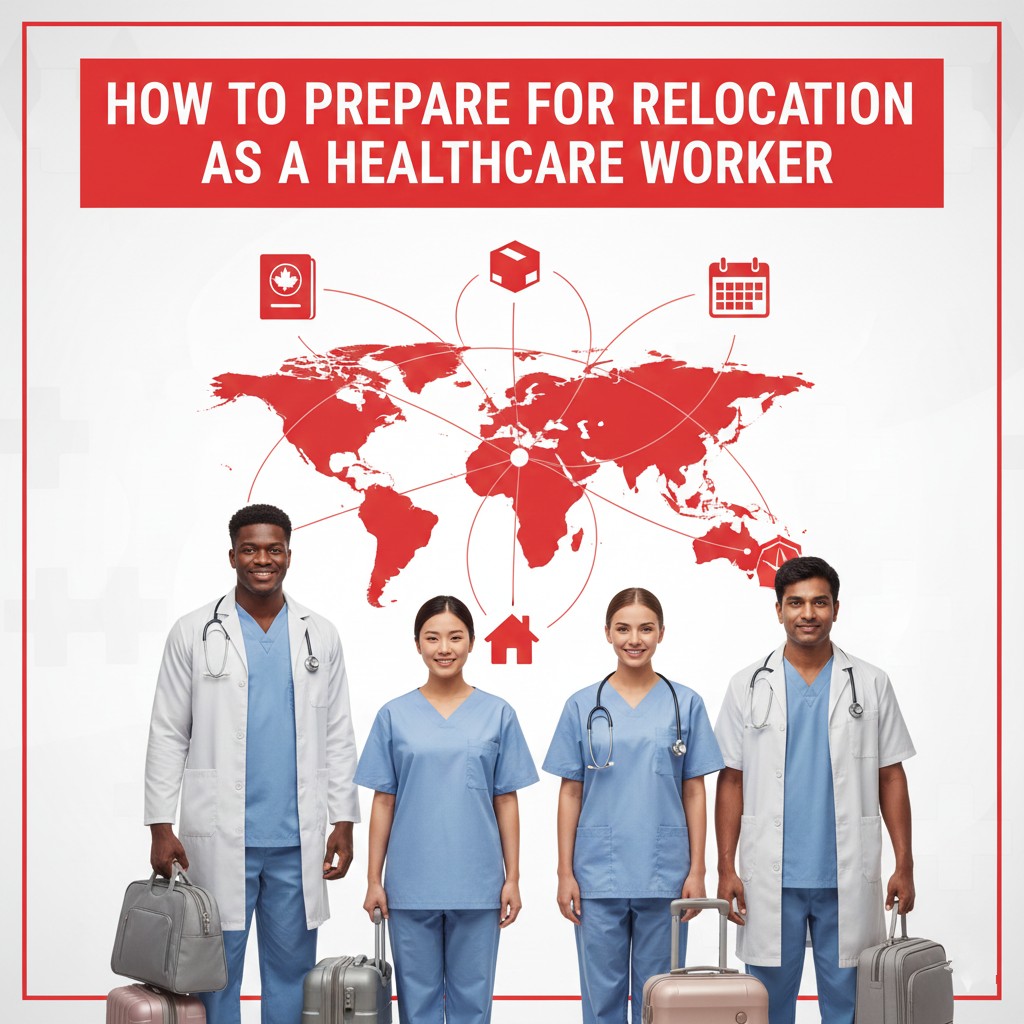
How to Prepare for Relocation as a Healthcare Worker

Relocating internationally as a healthcare professional requires meticulous planning across three critical areas: licensing, employment, and housing. This comprehensive guide covers everything you need to prepare for a successful transition in 2025.
📋 Phase 1: The Licensing Journey (6-12 Months Before Move)
Step 1: Credential Assessment & Verification
Start: 12-18 months before planned relocation
For Each Destination Country:
🇨🇦 Canada:
- Nurses: National Nursing Assessment Service (NNAS)
- Doctors: Medical Council of Canada (MCC)
- Allied Health: Respective provincial regulatory bodies
- Cost: $500-$1,500 CAD
- Timeline: 6-12 months
🇺🇸 USA:
- Nurses: CGFNS International (VisaScreen)
- Doctors: Educational Commission for Foreign Medical Graduates (ECFMG)
- Lab Techs: ASCP International Certification
- Cost: $700-$2,000 USD
- Timeline: 6-9 months
🇬🇧 UK:
- Nurses: Nursing & Midwifery Council (NMC)
- Doctors: General Medical Council (GMC)
- Allied Health: Health and Care Professions Council (HCPC)
- Cost: £1,000-£1,500
- Timeline: 3-6 months
🇦🇺 Australia:
- Most Professions: Australian Health Practitioner Regulation Agency (Ahpra)
- Cost: AUD $800-$1,500
- Timeline: 4-8 months
Step 2: Examinations & Certifications
Critical Exams by Country:
| Country | Nurses | Doctors | Medical Lab |
|---|---|---|---|
| Canada | NCLEX-RN | MCCQE Parts I & II | CSMLS Exam |
| USA | NCLEX-RN | USMLE Steps 1-3 | ASCP Exam |
| UK | CBT & OSCE | PLAB/UKMLA | IBMS Portfolio |
| Australia | NCLEX/Ahpra | AMC Exams | AIMS Exam |
Preparation Time: 3-6 months per exam
Cost: $200-$800 per attempt
Step 3: Language Proficiency
Minimum Requirements 2025:
- Canada: CLB 7 (IELTS 6.0-7.0)
- USA: TOEFL iBT 83+ or IELTS 6.5+
- UK: IELTS 7.0/OET Grade B
- Australia: IELTS 7.0/OET B
Pro Tip: Take language tests early—they’re valid for 2 years
Step 4: Provincial/State Registration
After Passing Exams:
- Apply to the provincial/state regulatory body
- Submit all documents (originals + certified translations)
- Pay registration fees
- Complete any jurisprudence exams
- Obtain license number
Timeline: 1-3 months
Cost: $200-$500 annually
💼 Phase 2: Job Search Strategy (4-6 Months Before)
Strategic Job Search Timeline:
Month 1-2: Research & Preparation
- Identify target employers by region
- Research salary ranges and benefits
- Prepare a Canadian/US/UK-style resume
- Create a professional portfolio
Month 3-4: Active Applications
- Apply to 5-10 positions weekly
- Network on LinkedIn with healthcare recruiters
- Attend virtual job fairs
- Consider recruitment agencies (no-fee only)
Month 5-6: Interviews & Offers
- Virtual interview preparation
- Reference checks
- Contract negotiation
- Acceptance and start date planning
Best Job Search Platforms 2025:
Country-Specific Healthcare Portals:
- Canada: HealthForceOntario, HealthMatch BC, provincial health authority sites
- USA: Health eCareers, HospitalCareers, state hospital association sites
- UK: NHS Jobs, BMJ Careers
- Australia: Health.gov.au careers, state health department sites
General Platforms with Healthcare Filters:
- LinkedIn (Premium recommended)
- Indeed
- Glassdoor
- Monster
Virtual Interview Preparation:
Technical Setup:
- High-speed internet
- Professional background (virtual or physical)
- Good lighting and audio
- Test all equipment beforehand
Common Healthcare Interview Questions:
- “Why do you want to work in our healthcare system?”
- “Describe how you handle cultural differences in patient care.”
- “How do you manage work-life balance in demanding roles?”
- “What do you know about our organization’s values?”
Click Here To Learn More: Best 25 Healthcare Occupations in Global Shortage (Latest Report)
🏠 Phase 3: Housing & Relocation Logistics (3-4 Months Before)
Timeline for Housing Search:
3-4 Months Before: Research Phase
- Research neighborhoods near the workplace
- Understand rental markets
- Calculate a realistic budget (30-35% of income)
- Explore temporary housing options
2-3 Months Before: Virtual Search
- Start virtual viewings
- Connect with realtors/agents
- Join local Facebook housing groups
- Understand lease agreements in a new country
1-2 Months Before: Decision & Booking
- Secure temporary accommodation (1-3 months)
- Arrange furniture rental if needed
- Plan for immediate needs upon arrival
Temporary Housing Options:
Short-Term (1-3 Months):
- Extended stay hotels (Suite hotels, Residence Inn)
- Corporate housing
- Airbnb (negotiate monthly rates)
- Serviced apartments
Cost Range: $1,500-$4,000/month, depending on location
Pro Tip: Book temporary housing for at least 4-6 weeks to give yourself time to find permanent housing
Permanent Housing Considerations:
Key Factors for Healthcare Workers:
- Commute Time: Shift work requires reliable transportation
- Safety: Consider safety for odd-hour commutes
- Proximity to Hospital: For emergency call requirements
- School Districts: If relocating with family
- Public Transportation: Access for all shifts
Budget Planning for Housing:
Recommended Allocation:
- Rent/Mortgage: 30-35% of net income
- Utilities: 5-10%
- Transportation: 10-15%
- Food: 10-15%
- Savings: 10-15%
- Other: 15-25%
2025 Average Rental Costs:
| City | 1-Bedroom | 2-Bedroom | Notes |
|---|---|---|---|
| Toronto | $2,300 CAD | $2,900 CAD | High demand near hospitals |
| Vancouver | $2,500 CAD | $3,200 CAD | Limited inventory |
| London, UK | £1,600 | £2,100 | Zones 2-3 recommended |
| Sydney | $600 AUD/wk | $750 AUD/wk | Close to public transport |
| New York | $3,200 USD | $4,000 USD | Consider neighboring NJ/CT |
✈️ Phase 4: Immigration & Documentation (6-8 Months Before)
Critical Documents Checklist:
Personal Documents:
- Valid passport (minimum 6 months validity)
- Birth certificates for all family members
- Marriage/divorce certificates
- Educational certificates (originals + certified translations)
- Professional licenses and certifications
- Reference letters from previous employers
Immigration Documents:
- Work permit/visa approval
- Job offer letter
- Police clearance certificates (from all countries lived in)
- Medical examination results
- Biometrics confirmation
Financial Documents:
- Bank statements (3-6 months)
- Credit report from the home country
- Proof of funds for settlement
- Employment contract with salary details
Visa Processing Times 2025:
| Country | Visa Type | Processing Time |
|---|---|---|
| Canada | Work Permit | 8-12 weeks |
| USA | H-1B/EB-3 | 4-8 months |
| UK | Health & Care Visa | 3 weeks |
| Australia | Skilled Visa | 6-12 months |
Apply Early: These times are estimates and can vary
💰 Phase 5: Financial Preparation (3-6 Months Before)
Relocation Budget Template:
One-Time Costs:
- Immigration fees: $1,000-$3,000
- Licensing exams: $500-$2,000
- Flight tickets: $800-$3,000
- Temporary housing deposit: $2,000-$5,000
- Furniture/appliances: $3,000-$8,000
- Total: $7,300-$21,000
Monthly Costs (First 3 Months):
- Rent: $1,500-$4,000
- Utilities: $200-$500
- Groceries: $400-$800
- Transportation: $200-$600
- Health insurance: $200-$800
- Total Monthly: $2,500-$6,700
Recommended Savings: 6 months of expenses minimum
Banking Setup:
Before You Leave:
- Open an international bank account if available
- Get a credit card with no foreign transaction fees
- Notify Home Bank of the international move
- Arrange international wire transfer capability
Upon Arrival:
- Open a local bank account (appointment often needed)
- Get local credit/debit cards
- Set up online banking
- Establish credit history (may require secured card initially)
🏥 Phase 6: Healthcare & Insurance (2-3 Months Before)
Health Insurance Transition:
Home Country:
- Maintain coverage until departure
- Check international coverage options
- Get copies of medical records
- Fill prescriptions for a 3-month supply
Destination Country:
Canada:
- Provincial coverage after a 3-month wait
- Private insurance is needed initially
- The employer may provide interim coverage
USA:
- Employer-sponsored insurance typically
- COBRA option from previous employer
- Consider gap coverage during transition
UK:
- Immigration Health Surcharge provides NHS access
- Additional private insurance is optional
Australia:
- Medicare eligibility varies
- Private health insurance is often required
Medical Preparation:
- Complete dental work before leaving
- Get eye exams and prescriptions
- Obtain vaccination records
- Transfer prescriptions where possible
- Research how to access care in a new country
👨👩👧👦 Phase 7: Family Preparation (If Applicable)
For Spouses/Partners:
Work Authorization:
- Research spouse’s work rights
- Begin job search if allowed
- Update resume for the local market
- Network in advance
Social Integration:
- Join expat groups
- Research social opportunities
- Consider volunteer work initially
- Language classes, if needed
For Children:
School Preparation:
- Research school districts 6+ months ahead
- Gather school records and transcripts
- Understand enrollment requirements
- Consider school start dates vs. relocation timing
Emotional Preparation:
- Visit a new country virtually together
- Connect with other expat families
- Maintain connections with home
- Plan familiar items to bring

📦 Phase 8: Moving & Logistics (2-3 Months Before)
Shipping vs. Selling Decision:
Ship If:
- Sentimental value items
- High-quality furniture
- Specialty items are hard to replace
- Moving allowance covers the cost
Sell If:
- Older furniture
- Items not suited to the new climate
- High shipping costs vs. replacement
- Minimalist approach preferred
Moving Timeline:
8 Weeks Before:
- Get moving quotes (3-5 companies)
- Start decluttering
- Decide what to ship vs. sell
6 Weeks Before:
- Book movers
- Start packing non-essentials
- Arrange pet relocation if needed
4 Weeks Before:
- Confirm moving dates
- Arrange travel insurance
- Book temporary accommodation
2 Weeks Before:
- Final packing
- Cancel/transfer utilities
- Forward mail
- Say goodbyes
🛬 Phase 9: First Month Checklist
Week 1: Immediate Needs
- Set up a local SIM card
- Get a local transportation card
- Buy basic groceries and essentials
- Register with local authorities if required
- Connect utilities at permanent housing
- Register with a local healthcare provider
Week 2: Documentation
- Apply for Social Insurance Number (Canada) / SSN (USA) / NI (UK) / TFN (Australia)
- Open a local bank account
- Get a local driver’s license or ID
- Register children in school
- Enroll in language classes if needed
Week 3: Settling In
- Explore neighborhood
- Join local community groups
- Find a family doctor/dentist
- Set up home internet/TV
- Learn the public transportation system
Week 4: Career Focus
- Complete hospital orientation
- Understand workplace culture
- Join professional associations
- Network with colleagues
- Plan career development goals
🚨 Common Challenges & Solutions
Challenge 1: Licensing Delays
Solution:
- Start the process 18 months in advance
- Use expedited services where available
- Have backup employment options
Challenge 2: Housing Market Competition
Solution:
- Consider the suburbs instead of the city center
- Look for housing near transit lines
- Negotiate with landlords directly
- Use local real estate agents
Challenge 3: Cultural Adjustment
Solution:
- Join expat support groups
- Find a cultural mentor at work
- Take local culture classes
- Maintain connection to home culture
Challenge 4: Financial Strain
Solution:
- Secure relocation allowance in job offer
- Budget for 6 months without income
- Consider temporary part-time work
- Use community resources for newcomers
📱 Essential Apps & Tools for 2025
Navigation & Transportation:
- Google Maps (download offline maps)
- Local transit apps
- Uber/Lyft or local equivalents
- Car rental apps if needed
Housing & Local Services:
- Zillow/Realtor.ca/Rightmove equivalents
- Facebook Marketplace for local buys
- Nextdoor for neighborhood connections
- TaskRabbit for help with setup
Healthcare Specific:
- Licensing board apps
- Hospital/health authority apps
- Medication reminder apps
- Telehealth service apps
Financial Management:
- XE Currency for exchange rates
- Local banking apps
- Budget tracking apps (Mint, YNAB)
- International money transfer apps (Wise, PayPal)
🎯 Pro Tips for Successful Relocation
Timing Strategies:
- Best Time to Move: Late spring/early summer
- Better weather for moving
- More housing availability
- Schools start in the fall, giving adjustment time
- Worst Time: December-January
- Holiday disruptions
- Limited services
- Inclement weather in many destinations
Networking Before Arrival:
- Connect on LinkedIn with future colleagues
- Join professional associations in advance
- Participate in online forums for the destination city
- Attend virtual events for newcomers
Cultural Intelligence:
- Research workplace culture differences
- Understand communication styles
- Learn about the healthcare system structure
- Know patient interaction expectations
Self-Care During Transition:
- Expect an adjustment period (3-6 months)
- Maintain routines from home
- Stay connected with your support network
- Be patient with yourself and family
✅ Final Pre-Departure Checklist
30 Days Before:
- Confirm travel arrangements
- Pack essential documents in a carry-on
- Arrange pet relocation if applicable
- Cancel unnecessary subscriptions
- Finalize banking arrangements
14 Days Before:
- Pack suitcases
- Confirm temporary accommodation
- Arrange airport transportation
- Notify important contacts of the move
- Get an international driver’s permit if needed
7 Days Before:
- Final clean of the home
- Return borrowed items
- Confirm flight details
- Charge all electronics
- Print important documents
Day Before:
- Double-check passports/visas
- Pack chargers and adapters
- Confirm transportation to the airport
- Get a good night’s sleep
- Have local currency for arrival
🌍 Country-Specific Tips
Canada:
- Weather: Prepare for cold winters
- Healthcare: Provincial coverage varies
- Taxes: Higher, but with more services
- Multiculturalism: Strength in diversity
USA:
- Insurance: Health insurance is essential
- Driving: Often necessary outside cities
- Taxes: Complex, consider professional help
- Regional Variations: Culture varies greatly by region
UK:
- Housing: Smaller spaces than many expect
- Transport: Excellent public transit
- Weather: Mild but rainy
- Culture: Reserve initially, warm once familiar
Australia:
- Distance: Everything is far apart
- Weather: Sun protection essential
- Wildlife: Learn local safety tips
- Culture: Informal and outdoors-focused
Final Wisdom:
Relocating as a healthcare professional is a marathon, not a sprint. The most successful transitions happen when you:
- Start early (12-18 months for licensing)
- Budget generously (everything costs more than expected)
- Build support networks before arrival
- Remain flexible when things don’t go as planned
- Celebrate small victories along the way
Remember: Thousands of healthcare professionals successfully relocate each year. With careful planning, research, and persistence, you can join them in building a rewarding international career and life.
Next Steps Today: Create a master timeline with all your critical deadlines, starting with licensing application dates. Then begin researching specific neighborhoods in your target destination to understand housing options and costs.
